
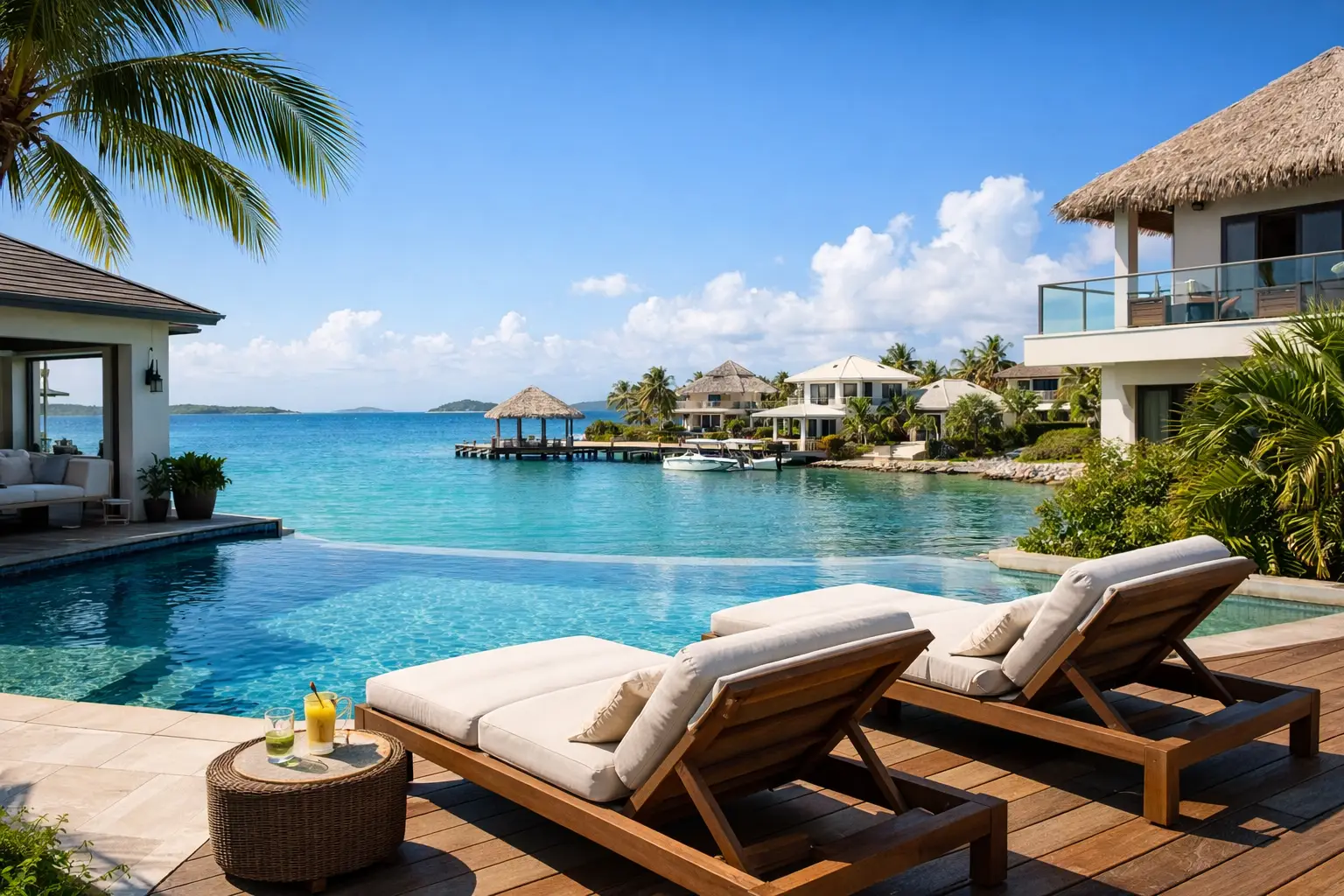
Caribbean Waterfront Villa Investment Guide
A villa can look extraordinary at sunset and still be the wrong investment by morning. That is the central truth behind caribbean waterfront villa investment. For affluent buyers, the appeal is obvious – direct water access, privacy, prestige, and the kind of lifestyle few assets can deliver. But the best purchases are not driven by scenery alone. They are shaped by access, holding costs, rental strategy, build quality, and the strength of the local market.
This is not a search experience. It is a strategy decision. A waterfront villa in the Caribbean can serve as a personal retreat, a legacy asset, or an income-producing property, but each goal points to a different kind of acquisition. The investor who wants consistent rental demand will not always buy the same property as the family seeking long-term appreciation and occasional personal use.
Why caribbean waterfront villa investment attracts serious buyers
Luxury waterfront real estate occupies a very specific place in a portfolio. It offers tangible enjoyment, constrained supply, and international buyer appeal. Unlike easily replicated product inland, prime shoreline inventory is finite. On many islands, the most desirable stretches are already built out, tightly held, or limited by planning controls and geography.
That scarcity matters. It can support pricing over time, especially in destinations with established airlift, strong hospitality infrastructure, and a steady flow of high-net-worth visitors. Buyers from the US, Canada, Europe, and Latin America are not only purchasing square footage. They are purchasing access – to marinas, beaches, golf, branded services, and a level of privacy that is increasingly difficult to find.
Still, scarcity alone is not enough. Some islands have exceptional natural beauty but limited year-round demand. Others have stronger rental performance but higher entry prices. A refined investment approach weighs both emotional appeal and market depth.
What separates a trophy property from a sound investment
Not every waterfront villa is a strong asset. The distinction usually comes down to four factors: location quality, operational usability, resilience, and exit appeal.
Location quality means more than being near the water. Serious buyers look closely at shoreline type, elevation, exposure, beach quality, privacy, and proximity to the island’s best amenities. A calm bay with easy swimming and quick access to dining, marinas, and private aviation often performs differently than a remote cliffside home with dramatic views but limited convenience.
Operational usability is equally important. A beautiful home that is difficult to service, manage, or rent may underperform. Investors should think beyond architecture and ask how the property functions over time. Is there reliable property management nearby? Is the layout well suited to guests? Does the home support indoor-outdoor living in a way that feels effortless rather than staged?
Resilience is a practical consideration that sophisticated buyers do not ignore. Construction quality, site planning, drainage, wind exposure, and maintenance requirements all affect long-term ownership experience. Waterfront ownership is rewarding, but it is not passive. Salt air, humidity, and weather exposure place a premium on design, materials, and disciplined upkeep.
Exit appeal is where many investors either create value or limit it. The best villas attract more than one buyer profile. They can appeal to a family office, a second-home purchaser, or a rental-minded investor. Properties with broad international appeal tend to offer better optionality when it is time to sell.
Choosing the right island for a Caribbean waterfront villa investment
The Caribbean is not one market. It is a collection of distinct jurisdictions, buyer pools, infrastructure levels, and lifestyle propositions. That is why island selection often matters more than the villa itself.
For buyers prioritizing rental income, destinations with strong tourism, direct flights, established luxury hospitality, and professional management infrastructure often deserve closer attention. These markets tend to support more predictable seasonal demand and better guest expectations.
For buyers focused on long-term capital preservation, supply-constrained islands with a polished luxury profile and enduring international reputation may be more compelling. In those markets, the emphasis is often on quality of location and rarity rather than short-term yield.
For buyers who want a hybrid approach, the sweet spot is usually a destination that offers lifestyle credibility and operational maturity. Think less about chasing the cheapest waterfront and more about purchasing where high-quality demand already exists.
This is where an experienced regional advisor adds real value. Comparing one island to another requires more than browsing listings. It requires understanding how each market actually trades, what inventory is quietly available, and where future buyer demand is likely to remain strongest.
Income potential depends on the use case
Many buyers ask whether a villa will pay for itself. The better question is how the property fits your intended ownership model.
If the villa will be heavily used for personal stays during peak season, rental income may be secondary. In that case, the investment case often rests on enjoyment, quality of asset, and long-term appreciation potential. Buyers in this category usually care most about effortless ownership and preserving a highly desirable home for years to come.
If the villa is meant to operate as a luxury rental, the analysis becomes more operational. Bedroom count, staff configuration, beach access, pool design, outdoor entertaining areas, and proximity to demand drivers all influence performance. So does brand positioning. A villa that photographs beautifully but lacks practical guest flow may not command the rates its views suggest.
There is also a middle path. Many owners want selective rental income that offsets carrying costs without turning the property into a full-time hospitality business. That approach can work well, but it requires realistic forecasting and disciplined calendar management.
The hidden difference between headline price and true value
In luxury Caribbean real estate, the asking price is only one part of the picture. Two villas may sit at similar price points and deliver very different ownership experiences.
One may require significant ongoing upkeep because of exposure and design choices. Another may have superior construction, easier access, and better resale positioning. One may sit in a tightly managed enclave that protects standards and supports service. Another may feel more independent but place more responsibility on the owner.
True value comes from alignment. The right asset is the one that supports your lifestyle, fits your time horizon, and remains desirable to the next buyer. Paying more for better fundamentals is often the more disciplined decision.
Common mistakes buyers make
The most expensive mistake is buying for emotion alone. Waterfront real estate should inspire you, but it should also stand up to scrutiny. A home can be visually unforgettable and still be compromised by poor access, awkward orientation, or costly maintenance.
Another common mistake is treating the Caribbean as a uniform market. Buyers sometimes assume that strong performance in one destination translates to another. It rarely does. Rental demand, inventory depth, service quality, and buyer liquidity vary considerably.
A third misstep is underestimating how much local execution matters. Cross-border purchases involve moving parts, and waterfront assets add another layer of complexity. Buyers who rely only on listing portals or fragmented local contacts often miss both risk and opportunity.
Where expert guidance changes the outcome
At this level of the market, access and judgment matter as much as inventory. Many of the most compelling opportunities are not marketed broadly, and even well-presented listings can require careful evaluation.
That is why sophisticated buyers often work with one trusted advisor who can compare islands, coordinate local specialists, and keep the process aligned with the original investment goal. Island Property Group is built around that model – one experienced relationship across the Caribbean rather than a patchwork of disconnected searches.
The value is not just convenience. It is clarity. A disciplined acquisition process helps buyers separate rare opportunities from expensive distractions, especially when considering waterfront property across multiple destinations.
A more durable way to think about ownership
The best waterfront villa investments tend to age well because they satisfy both personal and market demand. They are enjoyable to own, easy to explain, and difficult to replace. They offer a location people already want, a home that functions beautifully, and a level of scarcity that remains meaningful over time.
That does not mean every buyer should pursue the same strategy. Some should prioritize rental-ready villas in proven resort markets. Others should focus on private, irreplaceable homes that function as long-term family assets. The smartest move is not chasing a universal formula. It is buying with a clear thesis, in the right destination, with the right guidance.
When a waterfront villa is selected with that level of care, it becomes more than a beautiful purchase. It becomes a well-placed piece of a larger life.
Frequently Asked Questions
What makes a waterfront villa in the Caribbean a good investment?
The strongest waterfront villa investments are typically located in established luxury markets with limited beachfront inventory, strong international demand, quality infrastructure, and long-term resale appeal. Factors such as beach quality, accessibility, construction standards, and rental potential also play an important role.
Can a Caribbean waterfront villa generate rental income?
Yes. Many luxury waterfront villas generate seasonal rental income, particularly in destinations with established tourism and professional property management. Rental performance depends on the property’s location, amenities, design, guest capacity, and overall market demand.
What are the ongoing costs of owning a Caribbean waterfront villa?
Owners should budget for property management, insurance, maintenance, landscaping, utilities, staffing (if applicable), homeowners association fees, and routine upkeep. Waterfront homes also require regular maintenance due to exposure to salt air, humidity, and tropical weather.
Should I buy a waterfront villa for personal use or as an investment?
The answer depends on your objectives. Some buyers prioritize a family retreat with long-term appreciation, while others focus on rental income or a combination of both. Defining your ownership strategy before purchasing helps identify the property and destination best suited to your goals.