
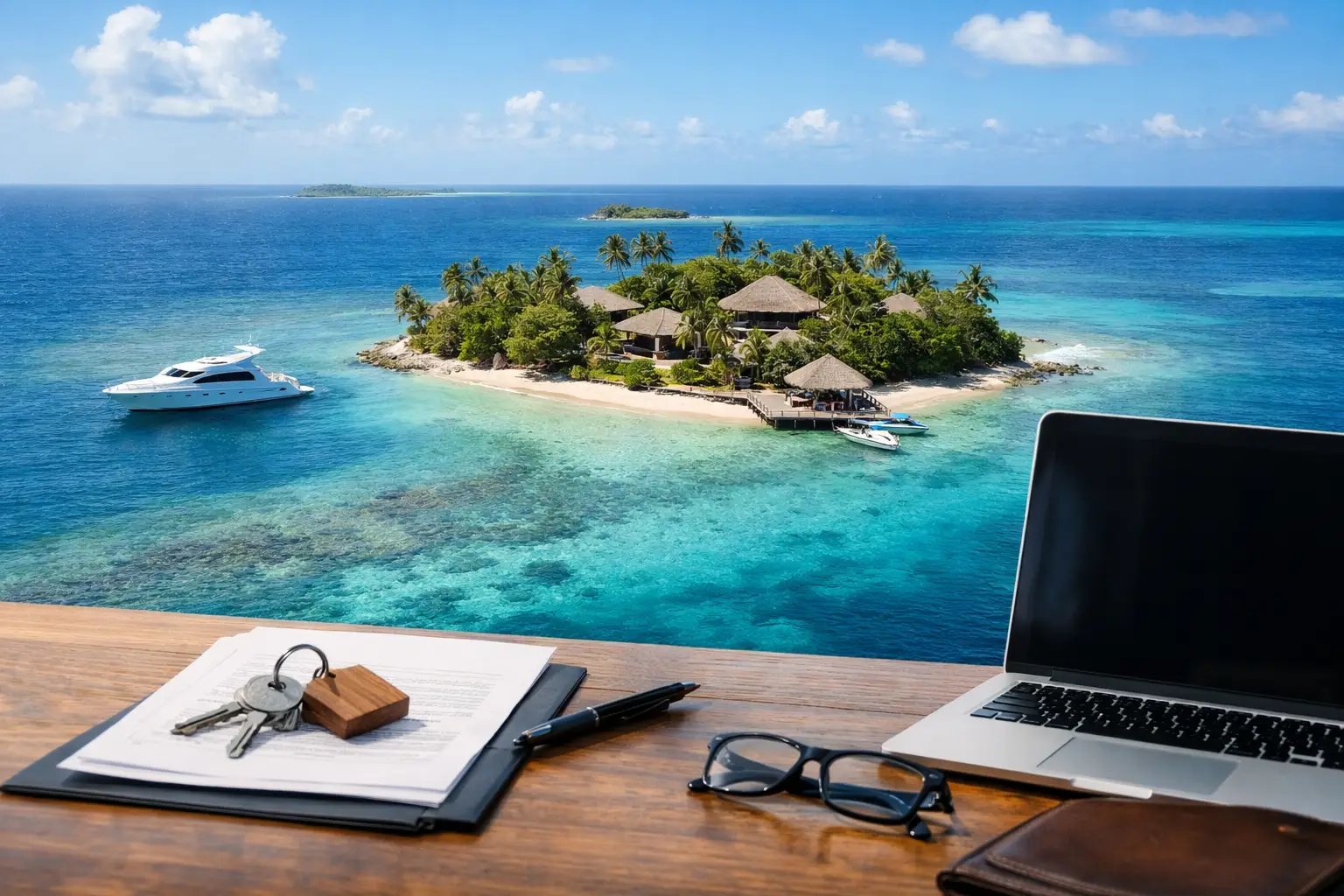
How to Purchase a Private Island in the Caribbean
A private island is not simply a more secluded version of a beachfront estate. It is a distinct acquisition category, where the view, shoreline, access, infrastructure, and jurisdiction all shape the value of the opportunity. The most successful buyers begin by treating the purchase as both a personal legacy decision and a carefully managed real estate project.
For those considering how to purchase a private island, the first decision is not where to look. It is what ownership must deliver. A family retreat, a hospitality asset, a long-term land hold, and a future residential development each require a different approach to location, scale, approvals, operating costs, and exit strategy.
Define the Island You Actually Need
The word “private” can describe very different properties. Some islands sit minutes from a major marina and have established utilities, protected anchorages, and existing residences. Others are entirely undeveloped, accessible only by boat or seaplane, and best suited to a buyer prepared for a multi-year design and construction program.
Begin with a clear brief. Consider the intended use, the number of guests or residences, preferred level of privacy, access requirements, and appetite for development. A buyer seeking a turnkey escape may prioritize an island with a dock, power, freshwater systems, staff accommodations, and a completed main residence. An investor or developer may place greater value on acreage, coastline, topography, and a jurisdiction that supports an appropriate hospitality or residential vision.
Budgeting should extend well beyond the purchase price. Islands can require investment in docks, solar or generator systems, water production and storage, communications, landscaping, security, marine transport, staff, insurance, and routine maintenance. The right island is one whose ongoing operating profile fits your intended lifestyle or business plan.
Choose a Jurisdiction Before You Choose a View
The Caribbean offers extraordinary variety, but no two markets operate in precisely the same way. Ownership pathways, foreign-buyer processes, development permissions, environmental requirements, title practices, and transaction timelines vary by country and sometimes by island.
The Bahamas, for example, offers a broad range of private-island opportunities and convenient access from North America. The British Virgin Islands, Turks and Caicos, Belize, St. Vincent and the Grenadines, Antigua and Barbuda, and the Grenadines each appeal to buyers for different combinations of sailing access, privacy, natural beauty, and development potential. The best fit depends on how you intend to use the property, not simply on a favorite destination.
This is where a cross-border advisor adds real value. A curated search should account for more than listing availability. It should evaluate air and marine access, proximity to services, the practical cost of construction, weather exposure, nearby development, and the local professionals needed to carry the transaction forward. This is not a search experience. It is a coordinated acquisition process.
How to Purchase a Private Island With the Right Team
Private-island transactions benefit from a disciplined team assembled early. Your real estate advisor should understand both the regional market and the operational realities of island ownership. Local legal counsel can review title, ownership requirements, contracts, and applicable approvals. Depending on the property, you may also need surveyors, environmental specialists, architects, engineers, marine consultants, insurance advisors, and project managers.
For international buyers, the local team matters as much as the property itself. A beautiful island can become an expensive distraction if key questions are left unanswered until after closing. Your advisor should help organize communication among local professionals while keeping your goals, timeline, and confidentiality at the center of the process.
Island Property Group provides this concierge-level coordination across the Caribbean through a trusted network of local specialists. For buyers comparing opportunities in multiple jurisdictions, one experienced relationship can bring needed continuity to a market that is otherwise highly fragmented.
Evaluate Access, Utilities, and Buildability
The romance of arriving by boat is real. So are the practical questions that follow. Before making an offer, assess how people, supplies, construction materials, and emergency services will reach the island. A protected dock or reliable anchorage may significantly affect both daily enjoyment and future value.
Utilities deserve the same scrutiny. Determine how the island receives or generates electricity, stores potable water, manages wastewater, and maintains communications. Some buyers value the independence of solar power, battery storage, rainwater collection, and desalination. Others prefer proximity to mainland utility connections. Neither approach is inherently better, but each has cost, maintenance, and staffing implications.
Buildability is equally important. Existing structures may need to be reviewed for condition and compliance. On undeveloped land, the question is not simply whether a villa can be imagined there. It is whether the site can support roads, drainage, foundations, docks, wastewater systems, and storm-resilient construction in a way that aligns with local requirements and the property’s natural environment.
Conduct Thorough Due Diligence Before Commitment
Due diligence is where an island purchase becomes a serious real estate decision rather than an emotional one. The process should examine title and boundary information, access rights, existing leases or agreements, planning history, coastal and environmental considerations, building permits, utility arrangements, and the condition of all improvements.
The shoreline deserves particular attention. A private island’s beaches, reefs, mangroves, and waterfront infrastructure may be among its greatest assets, but they can also involve specific protections and development considerations. Experienced local counsel and technical professionals should guide this review based on the property and jurisdiction.
Buyers should also ask for a realistic picture of annual ownership. Staffing, fuel, vessel maintenance, landscaping, insurance, security, repairs, and replacement reserves can vary considerably. If the island will be rented, operated as a resort, or held for future development, assess the operating model with the same care as the purchase itself. Rental and appreciation potential should be evaluated conservatively, with market-specific assumptions rather than broad promises.
Structure the Offer Around the Real Opportunity
A thoughtful offer reflects more than price. It may include an appropriate due-diligence period, conditions tied to key documentation or approvals, an inventory of furnishings and equipment, and a clear timetable for closing. On a furnished island, items such as boats, generators, maintenance equipment, and staff arrangements can be material to the transaction and should be clearly addressed.
Discretion is often essential. Many private islands are marketed quietly, and some of the most compelling opportunities are introduced through trusted relationships rather than broad public exposure. Buyers who are prepared with a defined brief, proof of financial capacity, and a responsive advisory team are better positioned when the right opportunity appears.
Ownership structure is another early discussion. Your legal, accounting, and wealth advisors can help you consider the most suitable approach for your family, investment, or development objectives. The correct structure depends on your circumstances and the relevant jurisdiction, so it should be established with qualified professional guidance rather than treated as an afterthought.
Plan for the First Year of Ownership
Closing is the beginning of island stewardship. The first year often involves establishing operations, selecting staff and vendors, reviewing security protocols, addressing deferred maintenance, and making initial improvements that enhance comfort and resilience. Buyers who plan this transition before closing tend to enjoy their property sooner and avoid rushed decisions.
For a turnkey island, the priority may be retaining capable staff and preserving established systems. For a development site, the first phase may involve surveys, concept design, permitting strategy, and carefully sequencing marine and infrastructure work. In either case, patience is an asset. Exceptional island properties reward thoughtful decisions and high-quality execution.
A private island can become a family sanctuary, an extraordinary hospitality concept, or a rare long-term real estate holding. The right purchase begins with clarity, discreet access to credible opportunities, and advisors who understand that every island has its own practical realities. When the property, jurisdiction, and ownership plan align, the result is far more meaningful than a remarkable address.
Posted by Mark Wood
July 16, 2026
Frequently Asked Questions
How do you buy a private island in the Caribbean?
Buying a private island begins with defining your ownership goals, selecting the right jurisdiction, and assembling an experienced advisory team. Buyers should evaluate access, infrastructure, utilities, title, environmental considerations, development potential, and ongoing operating costs before making an offer. Each Caribbean country has its own legal and regulatory requirements for foreign buyers.
Can foreigners purchase private islands in the Caribbean?
Yes. Many Caribbean countries allow foreign buyers to purchase private islands, although ownership regulations, government approvals, taxes, residency options, and development requirements vary by jurisdiction. Working with experienced local legal counsel and a knowledgeable Caribbean real estate advisor helps ensure the transaction complies with local laws.
What are the ongoing costs of owning a private island?
Beyond the purchase price, private island owners should budget for property management, staffing, security, insurance, dock maintenance, marine transportation, utilities, power generation, freshwater systems, landscaping, and routine repairs. Annual operating costs depend on the island’s size, infrastructure, location, and intended use.