
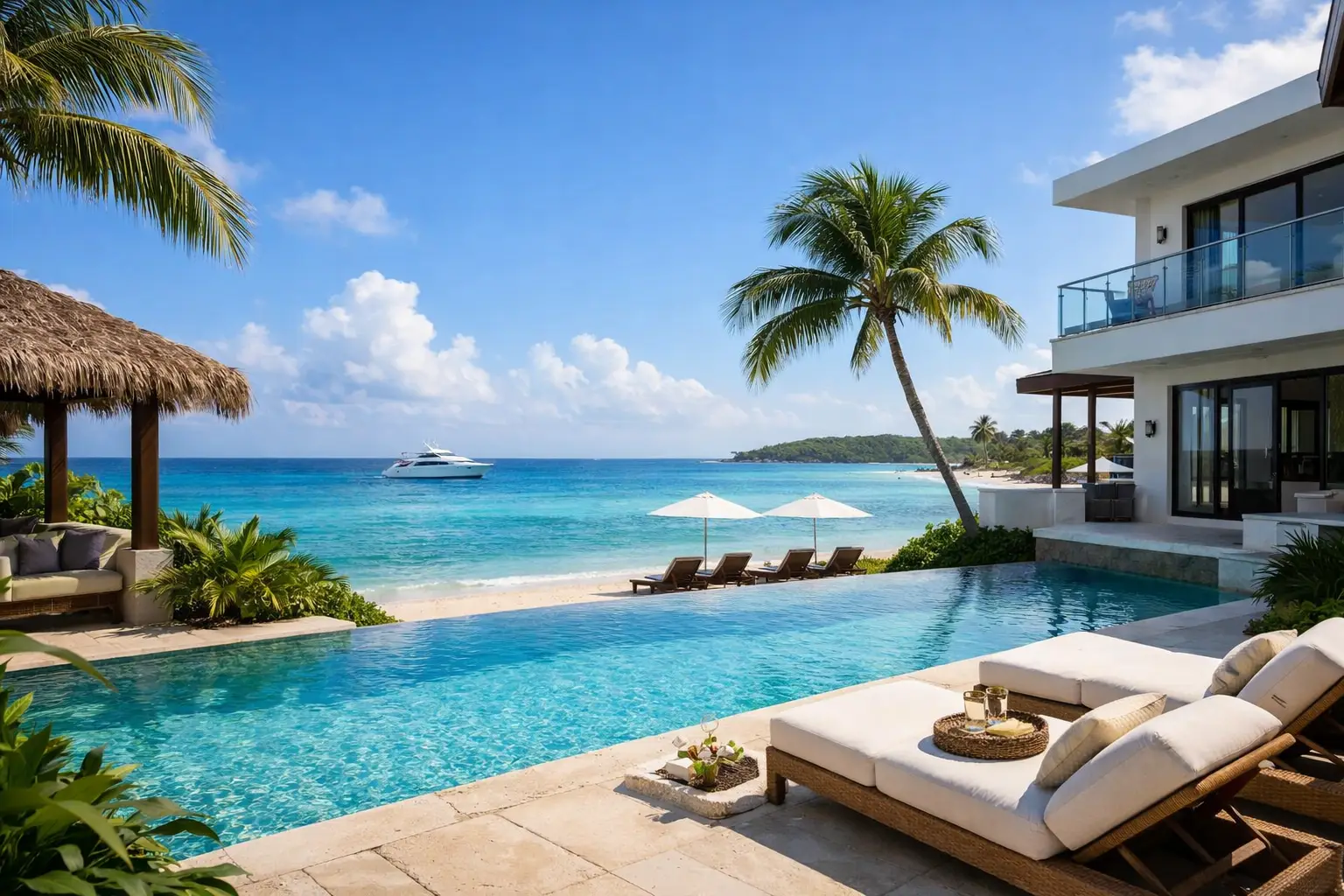
Luxury Caribbean Real Estate for Sale
A beachfront villa with a protected cove, a private island with development potential, a branded residence with resort services – the appeal of luxury Caribbean real estate for sale is rarely about square footage alone. For most serious buyers, the decision starts with a larger question: what kind of life, access, and long-term value do you want this property to deliver?
That is where the Caribbean becomes both compelling and complex. The region offers extraordinary range. You can move from turnkey oceanfront residences in Turks and Caicos to hillside estates in St. Barts, marina-facing homes in the Cayman Islands, and expansive beachfront land in Belize or Antigua. Each market has its own character, inventory profile, and pace. The best purchases are rarely driven by impulse. They are guided by fit.
What luxury Caribbean real estate for sale really includes
The phrase luxury Caribbean real estate for sale covers far more than vacation homes. At the upper end of the market, buyers are typically evaluating one of several distinct categories: finished beachfront estates, resort residences with hospitality services, private villas in gated communities, income-oriented rental properties, development parcels, boutique hotel assets, and private islands.
These assets do not serve the same objective. A family purchasing a second home may prioritize privacy, beach access, and direct flights. An investor may be more focused on rental demand, brand affiliation, and the strength of seasonal occupancy. A developer may care less about the existing improvements and far more about zoning, topography, infrastructure access, and future positioning.
This is why a listing search alone is not enough. Two properties at the same price point can offer entirely different outcomes depending on the island, ownership structure, and local market depth. In luxury Caribbean real estate, context matters as much as the asset itself.
How sophisticated buyers narrow the field
The strongest acquisitions usually begin with clarity on use case. Buyers who move efficiently tend to define whether the property is primarily for lifestyle, income, legacy holding, or development. Once that is clear, the shortlist becomes more strategic.
Lifestyle buyers focus on ease and experience
If the property is meant to be enjoyed immediately, convenience tends to matter more than many buyers expect. Flight access, proximity to marinas or private aviation, staffing availability, storm preparedness, and property management standards all affect ownership quality. A beautiful home in a remote setting can feel less appealing if every stay requires unnecessary coordination.
For some clients, a branded residence or fully serviced villa is the right answer. It may offer less land and individuality than a stand-alone estate, but the trade-off is operational simplicity. For others, privacy is the defining value, and that points toward larger estates, secluded compounds, or private island opportunities.
Investors look beyond the postcard view
Strong scenery is easy to find in the Caribbean. What is harder to find is an asset that aligns cleanly with your investment thesis. Buyers seeking income potential usually need to assess more than nightly rates. They should be looking at seasonality, property management quality, guest demand at that price tier, ease of maintenance, and whether the property type is genuinely scarce in that market.
A contemporary beachfront villa in a tightly held destination may command strong interest because the supply is limited. A large estate in a less liquid location may offer more house for the money, but a narrower buyer pool when it is time to sell. Neither is inherently better. It depends on whether your priority is yield, personal use, or long-term appreciation potential tied to scarcity.
Developers need a different lens
For developers and land investors, the Caribbean offers remarkable opportunity, but discipline is essential. A site can be visually spectacular and still be wrong for the intended product. Road access, utilities, beach quality, grade, neighboring uses, and the likely buyer or hospitality audience all shape feasibility.
This is where regional knowledge becomes especially valuable. Markets that are ideal for boutique hotel concepts may not be right for branded residences. Islands that perform well for high-end villa rentals may not support large-scale absorption at the same pace. The opportunity is real, but so is the need for precise market matching.
The islands are not interchangeable
One of the most common mistakes buyers make is treating the Caribbean as a single market. It is not. It is a collection of distinct micro-markets, each with its own buyer profile, inventory constraints, and style of luxury.
Turks and Caicos often appeals to buyers seeking refined beachfront living, strong service standards, and clear demand for luxury rentals. The Cayman Islands attracts purchasers who value polished infrastructure, waterfront residences, and year-round usability. Barbados can offer established west coast prestige as well as compelling resort and villa ownership. The British Virgin Islands and parts of the Grenadines may speak more directly to buyers who want boating access, privacy, and a quieter ownership experience.
Meanwhile, destinations such as the Dominican Republic, Jamaica, and Puerto Rico can present greater variety across price points, branded products, and large-scale resort communities. Anguilla and St. Barts remain highly attractive for clients who value exclusivity, strong villa culture, and a market where prime assets are consistently difficult to replicate.
The point is not that one island is better than another. The point is that each serves a different buyer. The right market is the one that fits your priorities with the fewest compromises.
What is often available beyond public listings
In the luxury segment, the visible market is only part of the story. Some of the most desirable properties never reach broad public exposure, especially estates, private islands, and hospitality assets where privacy matters to sellers. Others are technically on the market but traded quietly through trusted relationships long before they gain wider attention.
For buyers at this level, access is a competitive advantage. Not because exclusivity sounds good, but because premium inventory can move through private channels. The difference between seeing what is listed and knowing what is truly available can be significant.
This is also why a concierge-led approach tends to outperform a fragmented search. Cross-border transactions in the Caribbean often involve local brokers, attorneys, lenders, surveyors, managers, and advisors across multiple jurisdictions. Serious buyers benefit from one experienced point of guidance who can curate options, coordinate introductions, and keep the process disciplined.
What to evaluate before you fall in love with the property
Emotional pull is part of luxury buying. It should be. But the most successful buyers pair emotion with structure.
Start with the physical asset. Beach quality, elevation, views, privacy, layout, and design integrity all influence both enjoyment and long-term desirability. Then consider the operational side. How easily can the home be maintained? Is there experienced local staffing? If you plan to rent, does the property suit that audience naturally, or would it require too much compromise in personal use?
Ownership experience matters just as much. Some clients prefer turnkey properties with management already in place. Others want the freedom to customize and operate the asset privately. There is no universal rule here. The right answer depends on how hands-on you want to be.
Finally, think about exit quality even if you have no intention of selling soon. In luxury markets, the most resilient properties are typically the ones with enduring scarcity – irreplaceable beachfront, exceptional privacy, strong design, marina access, established resort affiliation, or a location within a consistently sought-after enclave.
Why guidance matters in luxury Caribbean real estate for sale
High-end Caribbean property should feel exciting, not disjointed. Yet many buyers quickly realize how fragmented the region can be when they try to compare islands, assess value, and coordinate professionals across borders. What looks simple from a distance often becomes time-consuming without the right structure.
That is why advisory support matters. This is not a search experience. It is a strategic acquisition process shaped by your priorities, your timeline, and your definition of value. Island Property Group serves clients this way across the region – not as a listing portal, but as a trusted luxury real estate concierge with market reach, discretion, and a curated network built for serious buyers, investors, and developers.
The best property in the Caribbean is rarely the one with the loudest marketing. It is the one that fits your life so well that ownership feels effortless from the day you acquire it. Start there, and the right island usually becomes much easier to see.
Posted by Mark Wood
June 28, 2026
Frequently Asked Questions
Which Caribbean island is best for buying luxury real estate?
There is no single best island for every buyer. The right destination depends on your goals, whether that is a second home, rental income, investment potential, boating access, privacy, or long-term appreciation. Markets such as The Bahamas, Turks and Caicos, the Cayman Islands, Barbados, and St. Barts each offer distinct advantages.
Can foreigners buy luxury real estate in the Caribbean?
Yes. Many Caribbean jurisdictions welcome foreign buyers, although ownership rules, taxes, permitting requirements, and closing procedures vary by country. Buyers should work with experienced local legal and real estate professionals before completing a purchase.
Are off-market luxury properties available in the Caribbean?
Yes. Many high-value estates, private islands, boutique hotels, and waterfront properties are marketed privately rather than through public listing services. Working with a well-connected luxury real estate advisor can provide access to opportunities that are not widely advertised.
What should I consider before buying luxury real estate in the Caribbean?
Beyond location and price, buyers should evaluate accessibility, ownership costs, property management, insurance, infrastructure, rental potential, legal requirements, and long-term resale demand. A thorough due diligence process helps ensure the property aligns with both your lifestyle and investment objectives.