
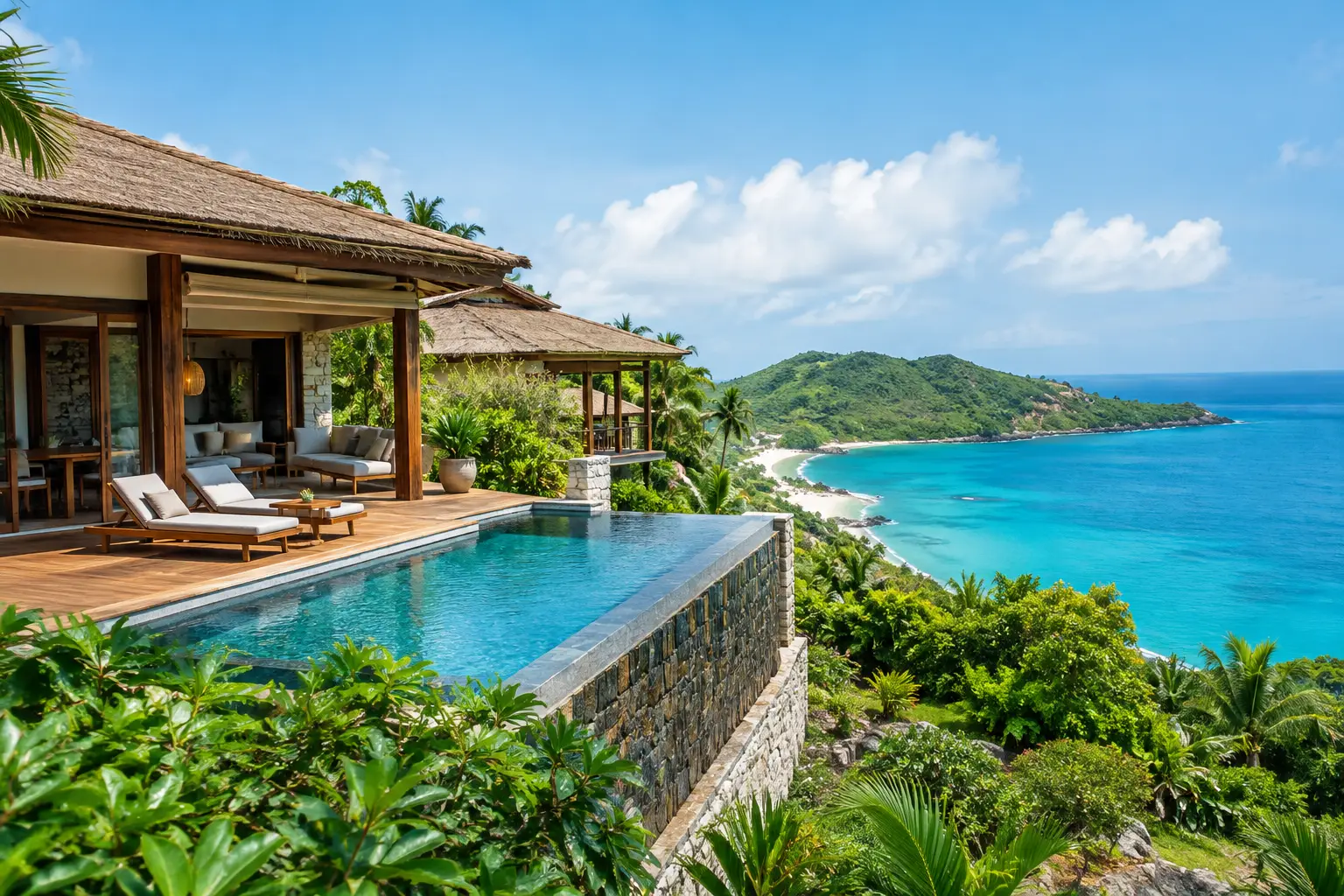
Best Eco Luxury Communities in the Caribbean
A beachfront residence can be visually spectacular and still ask too much of the landscape around it. The best eco luxury communities take a more considered position: they protect the qualities that make island ownership desirable in the first place – clear water, mature vegetation, quiet shorelines, and a genuine sense of place.
For discerning buyers, sustainability is no longer a separate feature category. It is part of how a community performs, how it feels to live there, and how confidently an owner can hold a property over time. The strongest projects pair exceptional architecture and hospitality-level service with practical systems designed for the realities of a coastal environment.
What Defines the Best Eco Luxury Communities?
Eco-luxury should never mean compromise. A well-conceived community can offer a private beach club, refined residences, attentive property management, and sophisticated dining while using land, water, and energy with greater care. The distinction lies in whether those elements were planned together from the beginning.
The most compelling communities generally start with the site rather than forcing a standard development model onto it. Homes may be positioned to preserve established trees, capture prevailing breezes, and maintain meaningful view corridors. Native planting can create privacy without relying on water-intensive lawns. Buildings can be oriented for shade and natural airflow, reducing dependence on mechanical cooling while making indoor-outdoor living more enjoyable.
This approach is particularly relevant in the Caribbean and Panama, where sun, wind, rainfall, coastal conditions, and limited island infrastructure all shape the ownership experience. The best developments acknowledge those conditions openly and invest accordingly.
Design that belongs to the setting
Architecture is often the first expression of a community’s environmental intentions. Look for durable materials selected for the local climate, deep overhangs, shaded terraces, operable openings, and layouts that invite natural ventilation. These decisions are not merely aesthetic. They can improve comfort, reduce operating demands, and help a residence remain graceful as it ages.
Thoughtful density matters as well. A low-density community may offer exceptional privacy and preserve more open space, but it may also carry higher infrastructure costs per residence. A carefully planned resort-residential setting can support more amenities and services, although owners should consider whether its scale still feels personal. There is no universal answer. The right balance depends on how you intend to use the home and the character of the island.
Water and energy systems with real purpose
In a region where resources can be finite, high-quality environmental planning is visible in the details. Rainwater collection, efficient irrigation, wastewater treatment, solar integration, battery storage, and energy-conscious lighting can all contribute to a more self-reliant community.
Buyers should look beyond broad sustainability language and ask how these systems are maintained, monitored, and funded. A solar array is valuable, for example, but its role differs greatly between a project that offsets common-area consumption and one designed to support broader energy resilience. Similarly, water conservation measures are only as effective as the operational standards behind them.
The objective is not to pursue a checklist. It is to understand whether the developer has created systems that make sense for the location and can be supported over the long term.
Privacy without disconnection
Luxury buyers often want seclusion, yet they also expect their home to be effortless to enjoy when they are away. The most appealing eco-luxury communities resolve this balance with discreet security, experienced on-site teams, attentive maintenance, and well-managed shared spaces.
That may mean private owner storage, concierge coordination, villa management, or a carefully curated amenity program. For owners who plan to rent, it can also mean a rental structure that protects the tone of the community rather than treating every residence as an interchangeable accommodation. Service is part of sustainability when it preserves the property, supports local standards, and removes friction from ownership.
How to Evaluate an Eco-Luxury Community Before You Buy
Beautiful renderings are not a substitute for due diligence. A buyer should evaluate an eco-luxury opportunity with the same discipline used for any significant cross-border acquisition, while giving special attention to the operational choices that will shape daily life.
Start with the master plan. Consider what has been conserved, where homes are positioned, and how roads, drainage, beach access, and community facilities interact with the natural setting. Ask how stormwater is managed and whether landscaping relies primarily on species suited to the environment. A community that feels tranquil during a site visit should also be designed to function well during periods of heavy rain, wind, and seasonal change.
Then consider the residence itself. The most attractive design is not always the most practical. Floor-to-ceiling glass may frame a remarkable sea view, but shading, glazing specifications, ventilation, and exposure all affect interior comfort and ongoing upkeep. Outdoor living areas deserve the same scrutiny. A terrace, pool, and outdoor kitchen should be designed for the sun, salt air, and prevailing weather patterns of that particular site.
Finally, examine the ownership experience. Confirm what is privately maintained, what is managed by the community, and how common infrastructure is funded. Review the standards for construction, landscaping, rentals, and property care. In a well-run community, these policies protect both the environment and the owner’s experience without becoming unnecessarily restrictive.
Where Eco-Luxury Has Particular Appeal
Not every island market delivers eco-luxury in the same way. On a more developed destination, the opportunity may be a sophisticated branded residence or resort community with advanced services and established air access. On a quieter island, the appeal may be a limited collection of villas centered on privacy, conservation, and a more intimate connection to the landscape.
In places such as the Bahamas, Turks and Caicos, the British Virgin Islands, St. Lucia, Dominica, and Belize, buyers can encounter distinct expressions of environmentally conscious luxury. Some prioritize marine settings and low-density shoreline living. Others are defined by rainforest, elevation, wellness, or a strong relationship to local agriculture and open land.
The right destination is not simply the one with the most visible green credentials. It is the place whose rhythm, access, services, and ownership structure align with your intended use. A family seeking easy arrivals and a broad amenity base may make a different choice than an owner seeking a private retreat, a boutique hotel opportunity, or a long-hold development site.
Why the Right Advisor Matters
A project can make a persuasive environmental case, but buyers still need a clear view of its substance. That means understanding the developer’s track record, the quality of the local team, the practical performance of infrastructure, and the market position of the residences within their destination.
For international buyers, the process is rarely limited to identifying an appealing home. It involves coordinating trusted local professionals, assessing ownership structures, considering property management, and comparing opportunities across multiple islands. The value of an independent advisor is perspective: knowing when a community’s sustainability is integral to its design and operations, and when it is primarily a marketing theme.
Island Property Group provides that concierge-level perspective across the Caribbean, connecting qualified buyers and investors with curated opportunities and the experienced local network required for a considered acquisition. The goal is not to create more options. It is to bring the right ones into focus.
The most rewarding eco-luxury purchase is a place you can enjoy with confidence – one where the setting has been respected, the services are equal to the address, and the community has been designed to endure well beyond the first impression.