
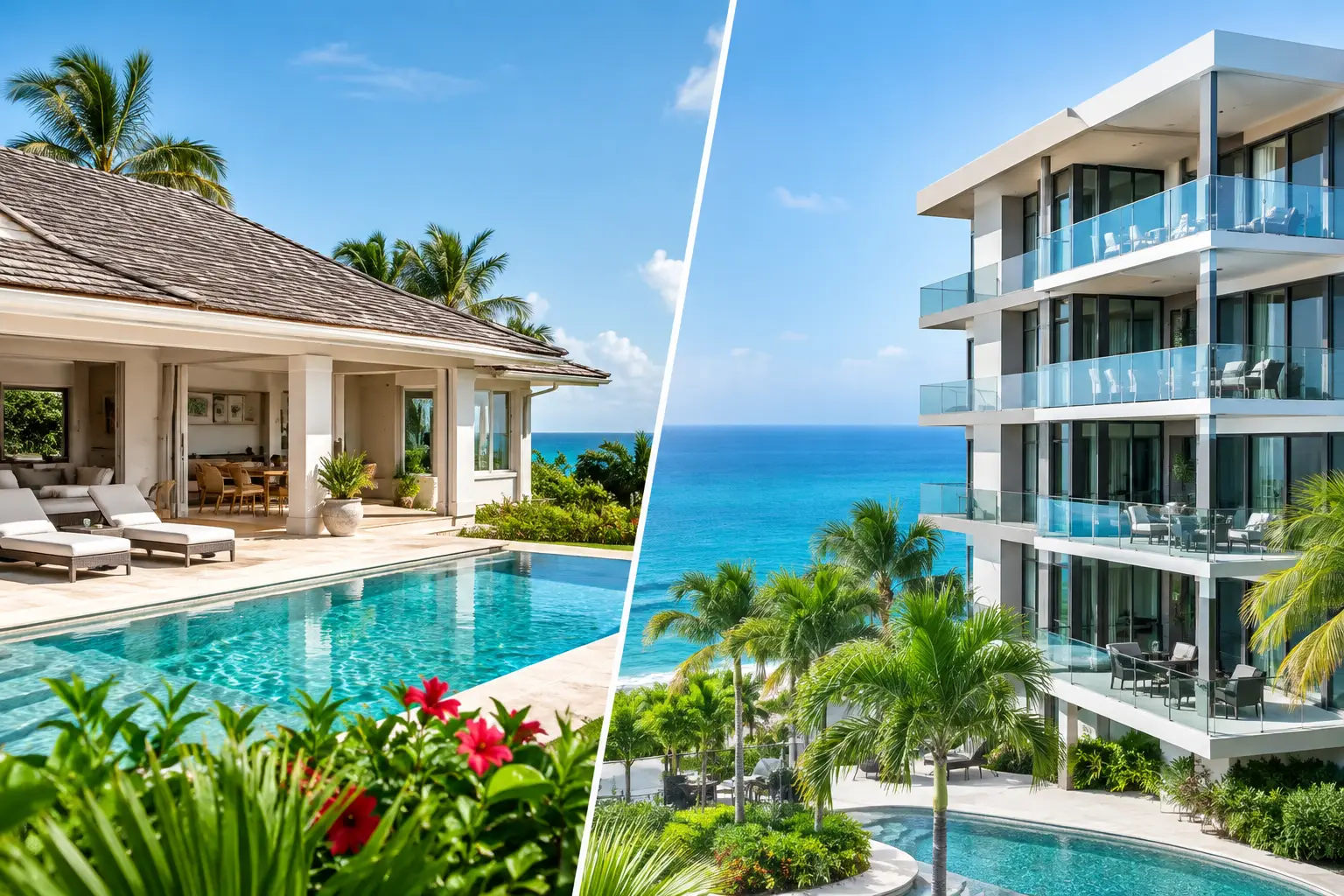
Villa Versus Condo Ownership in the Caribbean
A beachfront villa with a private pool and a sunset-facing terrace creates one kind of Caribbean life. A refined condo within a branded residence or resort community creates another. Both can be exceptional, but villa versus condo ownership is not simply a question of bedrooms, views, or purchase price. It is a decision about how you intend to use the property, how much responsibility you wish to retain, and what role the residence should play within your broader lifestyle and investment strategy.
For a buyer acquiring a second home across borders, the right choice often becomes clear once the daily experience is examined. Do you value complete privacy and the freedom to shape every detail? Or do you prefer a lock-and-leave residence with hospitality, security, and professional management already in place? The answer should guide the search long before a particular property captures your attention.
Villa Versus Condo Ownership: The Essential Difference
A villa is generally a more independent ownership experience. It may sit on its own parcel, within a private estate community, or on an expansive beachfront or hillside site. Owners typically have greater control over the residence, landscape, amenities, guest policies, and renovation decisions. That independence is often the attraction, particularly for families, frequent entertainers, and buyers who want a home that feels distinctly their own.
A condo, by contrast, places the owner within a shared residential structure or resort-led community. Individual residences are privately owned, while common areas, building systems, and amenities are maintained collectively. The experience can be highly polished: staffed arrival areas, fitness centers, beach clubs, pools, concierge services, and organized maintenance can all be part of the proposition.
Neither format is inherently superior. The more useful question is which ownership model supports the way you want to arrive, stay, host, rent, and leave.
Privacy, Space, and the Experience of Arrival
For many luxury buyers, a villa offers the highest degree of personal privacy. There are no shared corridors, elevators, or pool decks. The arrival is private, the outdoor spaces are yours alone, and the home can be designed around the rhythms of family and guests. A well-positioned villa can also offer the sense of separation that makes a Caribbean residence feel like a genuine retreat.
That privacy usually comes with a larger operational footprint. Pools require care, landscaping needs attention, roofs and exterior finishes face tropical conditions, and a stand-alone home relies on its own systems. For an owner who enjoys oversight and appreciates a tailored property, these responsibilities can be part of the pleasure. For someone who visits only a few times each year, they may feel like an unnecessary layer of administration.
Condo ownership tends to place convenience ahead of complete seclusion. You may share certain amenities and be closer to neighboring residences, but the trade-off can be compelling. Owners often arrive to a prepared home, maintained grounds, security coverage, and resort-style amenities without coordinating several service providers. In the right development, this can feel less like compromise and more like having a trusted team already in place.
Management: Where the Ownership Models Separate
The difference in management is often the deciding factor for international buyers.
A villa may require a property manager, housekeeper, pool technician, landscaper, maintenance team, and, depending on the property, security or estate staff. These services can be arranged to a very high standard, but they require direction, budgeting, and quality control. A sophisticated local management partner can make the process feel effortless, yet the owner still has more decisions to make.
With a condo, many routine responsibilities are centralized through a homeowners association or resort operator. Building exteriors, common systems, landscaping, security, and shared facilities are generally handled through established operating structures. Owners pay association fees for this support, but they gain predictability and save time.
The key is to look beyond the headline fee. A low association fee may not include the level of service you expect, while a higher fee may cover valuable items such as insurance for common areas, reserve funding, security, beach operations, and professional property management. For a villa, the same discipline applies: review historical operating costs and understand which systems are due for future attention. A residence should be evaluated as a living asset, not merely an architectural statement.
Rental Strategy and Income Potential
Both villas and condos can be appealing in vacation rental markets, but they often serve different guest profiles.
Villas typically attract groups, multigenerational families, privacy-focused travelers, and guests seeking a fully private setting. Larger villas with strong design, desirable views, staff capability, and proximity to beaches or marquee destinations can command meaningful nightly rates. Their rental calendar may be more seasonal, however, and marketing, turnover, guest services, and maintenance require careful coordination.
Condos can appeal to couples, smaller families, and travelers who value ease, amenities, and a resort setting. A residence within an established branded or managed community may benefit from recognized service standards and a streamlined rental program. This can reduce the owner’s operational burden, though it may also involve rental program rules, revenue splits, owner-use limitations, or furnishing requirements.
A rental decision should not begin with a revenue projection. Begin with your personal use. The most successful ownership plans are built around how often you want the home available to you, how much flexibility you require during peak periods, and whether the property will be positioned as a private retreat first or a hospitality asset first. Performance depends on location, product quality, seasonality, management, and the property’s ability to stand out in its market.
Customization and Long-Term Value
A villa usually provides more freedom to personalize. You may reconfigure interiors, build a pavilion, refresh landscaping, add wellness features, or refine the home over time to suit changing needs. Naturally, approvals, site conditions, and local requirements can affect what is possible, so the opportunity should be assessed before purchase rather than assumed.
Condo owners can customize interiors, but exterior changes and structural modifications are typically governed by association rules. This restriction preserves a consistent standard across the development, which many buyers appreciate. It can also make ownership more straightforward: the community protects the exterior presentation while you focus on the residence itself.
From a value perspective, villas often derive their distinction from land, privacy, views, and scarcity. A singular beachfront estate or hillside compound may have few direct substitutes. Condos can benefit from brand recognition, a prime resort location, professional operations, and a more accessible ownership format. In either case, long-term desirability comes down to enduring fundamentals: location, access, design quality, condition, and the strength of the ownership experience.
The Questions Worth Asking Before You Choose
Before deciding between a villa and a condo, consider the practical rhythm of ownership. How often will you visit? Will you travel with children, extended family, or staff? Do you enjoy creating a fully personal environment, or would you rather arrive to a residence that is already serviced and prepared? How important are on-site amenities, walkability, and professional security? And if you plan to rent, what degree of owner use and operational involvement feels right?
It is equally important to study the particular property rather than relying on category alone. Some villa communities provide exceptional shared services and security. Some condos offer remarkable privacy, generous terraces, and private elevators. A stand-alone villa may be easier to personalize, while a branded residence may offer an ownership experience that is difficult to replicate independently.
For buyers considering more than one island or jurisdiction, the comparison becomes even more nuanced. Ownership structures, operating costs, property management depth, and rental conventions can vary considerably across the Caribbean. That is where a coordinated advisory process matters. Island Property Group helps clients evaluate not just the residence, but the full ownership picture across markets, connecting each decision to the buyer’s lifestyle, timing, and long-term objectives.
Choose the Home That Lets You Enjoy the Caribbean More
The best property is not necessarily the largest villa or the most amenity-rich condo. It is the residence that feels natural from the moment you arrive and remains easy to own after the excitement of closing has passed.
Choose a villa when privacy, land, personalization, and a distinct family compound experience matter most. Choose a condo when simplicity, services, amenities, and lock-and-leave confidence are the priority. With the right guidance, either can become more than a beautiful place to stay. It can become your own enduring connection to the Caribbean.