
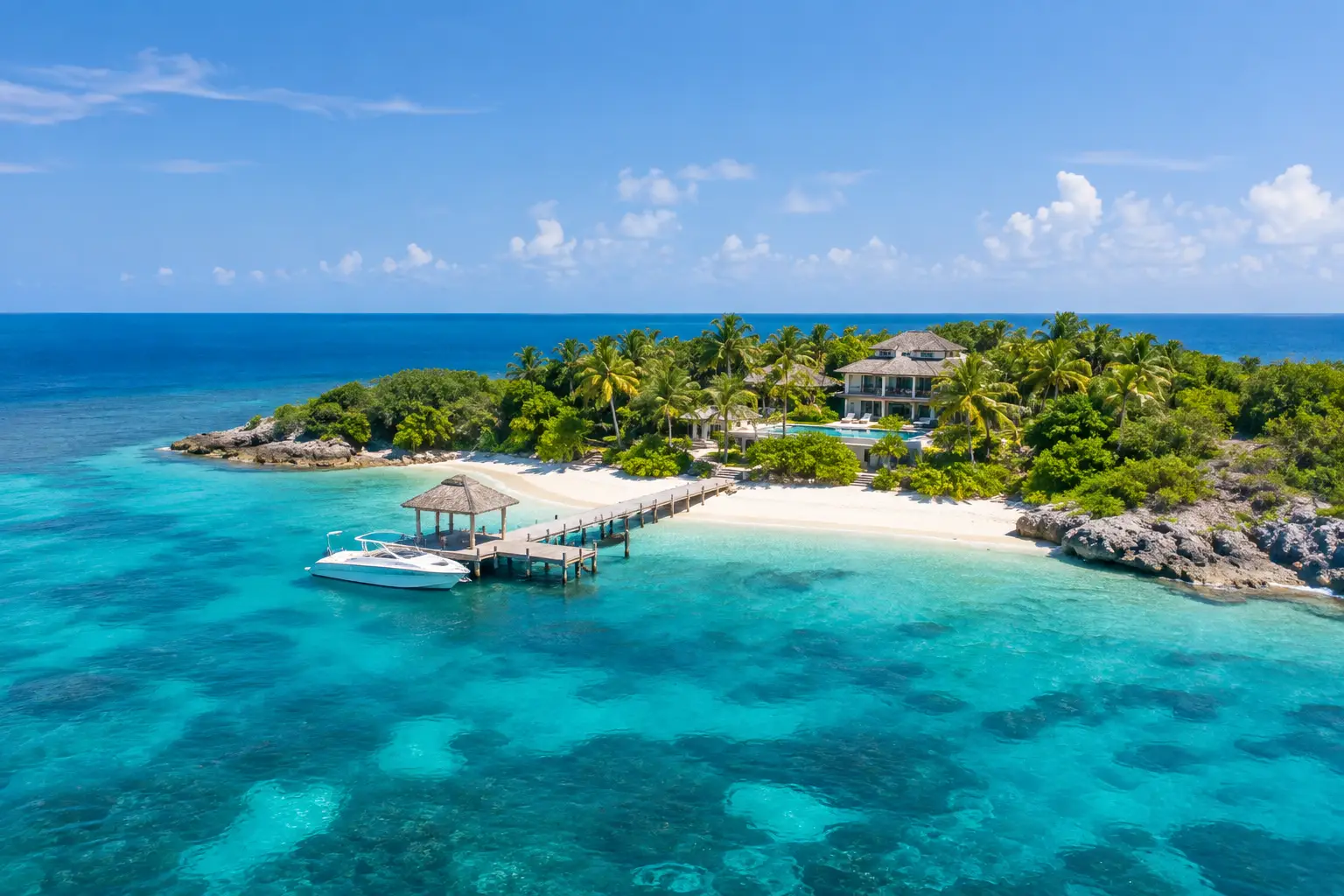
A Guide to Caribbean Private Island Ownership
A private island is not simply a luxury property with more shoreline. It is a self-contained decision about access, infrastructure, privacy, stewardship, and how you intend to spend your time. This guide to Caribbean private island ownership is designed for buyers who want the experience to feel considered from the first viewing through long-term operation.
The right island can become a family retreat, an exceptional hospitality asset, a legacy holding, or a carefully balanced combination of all three. The wrong fit can create unnecessary complexity, even when the setting is extraordinary. The distinction usually comes down to preparation, local knowledge, and a clear understanding of what ownership will ask of you after closing.
Begin With the Life You Want on the Island
Before comparing acreage, beaches, or asking prices, define the role the island will play. A buyer seeking an occasional private escape will prioritize convenience, reliable transport, and a residence that is ready to enjoy. A family office considering a boutique resort, marina concept, or branded residential opportunity will need to assess a much wider set of operational and development considerations.
Privacy is rarely an absolute measure. An island may be entirely separate from the mainland yet remain visible from neighboring villas, frequently crossed by boat traffic, or dependent on a nearby public dock. Conversely, a smaller cay close to a well-serviced destination may offer the discretion and ease that make ownership genuinely enjoyable.
Think specifically about arrival. Will guests come by private boat, scheduled ferry, helicopter, or seaplane? How long is the transfer in real conditions, not just on a map? Is there a protected landing area during seasonal weather? These questions influence every future visit, from moving furnishings and provisions to welcoming children, older relatives, staff, and guests.
A Guide to Caribbean Private Island Ownership Starts With Jurisdiction
The Caribbean is not one real estate market. Ownership structures, foreign-buyer procedures, permitting pathways, residency options, financing availability, and transaction customs vary substantially from one jurisdiction to the next. A beautiful island in the Bahamas, Belize, the British Virgin Islands, St. Vincent and the Grenadines, or Panama may offer very different pathways to acquisition and long-term use.
This is why an island search should not begin and end with online inventory. It should begin with a strategic review of where your objectives can be properly supported. For some buyers, ease of access from major international airports will lead the decision. For others, the priority may be a proven luxury tourism market, proximity to a full-service marina, or a setting suited to a multigenerational compound.
Local attorneys, surveyors, planning professionals, and transaction specialists should be engaged early. Their role is not merely administrative. They help establish how the land is held, what rights and restrictions attach to it, and whether the intended use is realistically aligned with local requirements. Advice should always be tailored to the island, the buyer, and the planned ownership structure.
Confirm What Is Actually Included
Island listings can describe a compelling vision, but the purchase should be evaluated on documented reality. Boundaries, shoreline rights, access easements, dock rights, existing permits, mooring arrangements, and the status of any structures all require careful verification.
Waterfront parcels are particularly nuanced. The land above the waterline may be owned, while the seabed, beach, or surrounding waters are governed differently. A dock, marina, beach club, or villa expansion may involve separate approvals. This does not diminish the opportunity. It simply means the opportunity must be understood in full before value is assigned to future plans.
Infrastructure Is Where Island Ownership Becomes Personal
A private island should feel effortless to its owners and guests. Delivering that feeling takes planning. Power generation and storage, water production or collection, wastewater management, communications, fuel delivery, provisioning, waste removal, and transport must all work together.
Some buyers prefer an existing estate with established systems and trained staff. Others are drawn to a raw or lightly improved island because it offers more creative freedom. Neither choice is inherently better. A developed island may reduce the timeline to enjoyment but can require a detailed review of system age, maintenance records, replacement needs, and operating practices. An undeveloped island can be remarkable, but it demands patience, technical expertise, and a realistic development schedule.
Resilience deserves particular attention. Backup power, water storage, durable construction, protected docks, storm-readiness procedures, and remote monitoring are not indulgences. They are part of responsible ownership in a marine environment. An experienced local property manager can help turn these systems into a disciplined operating plan rather than a series of last-minute decisions.
Budget Beyond the Acquisition Price
A private island’s purchase price is only one part of the capital picture. The annual budget will depend on location, staffing, boat operations, utilities, insurance, maintenance, landscaping, security, supplies, and the condition of the existing infrastructure. If the property will welcome paying guests, add hospitality operations, guest services, marketing, booking systems, and management.
The most useful operating budget is conservative and property-specific. It should reflect how often you plan to occupy the island, the level of service you expect, and whether a nearby mainland base can support maintenance and supplies. A remote island with a lean footprint can have a very different cost profile from an elaborate estate with multiple guest villas, a private marina, and full-time staff.
Buyers should also reserve capital for improvements that may not photograph dramatically but protect the experience: upgraded water systems, generator replacement, solar integration, dock reinforcement, staff housing, storage, and communications equipment. These investments often determine whether an island remains a pleasure to own over many years.
Match the Asset to Its Intended Use
A private island can be a personal sanctuary, but it can also support a carefully designed commercial purpose. The key is not to force one model onto a property that was better suited to another.
For private use, concentrate on privacy, transfer time, home design, guest capacity, and dependable day-to-day support. For a rental or hospitality concept, assess market positioning, access for guests, staffing availability, operational logistics, and the overall guest journey. For development, begin with the physical fundamentals: topography, buildable areas, water depth, access, utilities, environmental conditions, and the practical path from concept to completion.
It is tempting to focus on the highest possible density or largest possible program. The more refined approach is to identify a plan that respects the site and delivers a memorable experience at the right scale. In the Caribbean, scarcity, design quality, and operational excellence often matter more than sheer size.
Due Diligence Should Be Thorough, Not Rushed
The excitement of finding a rare island can create pressure to move quickly. Serious buyers protect their position by establishing a disciplined due diligence process before making assumptions about value or timing.
A complete review generally considers title and surveys, access and shoreline rights, physical condition, utilities and infrastructure, existing contracts, staffing arrangements, permits and planning history, environmental considerations, insurance history, and projected operating needs. Where a development or hospitality program is contemplated, the review should extend to the feasibility of that specific plan.
Site visits should be purposeful. Visit by water as well as by air when possible. Observe the approach, landing conditions, neighboring activity, prevailing winds, and the distance to services. Stay overnight if the opportunity allows. The island’s character after sunset, its sound levels, and the reliability of its systems can reveal more than an afternoon showing.
Build the Right Advisory Team
Private-island transactions are rarely best served by a single relationship acting alone. They call for coordination among local real estate professionals, attorneys, surveyors, technical consultants, property managers, architects, and, where relevant, hospitality and development specialists.
The value of a lead advisor is not simply access to listings. It is the ability to coordinate the right people, ask the questions that protect the buyer’s interests, and keep the process focused on the outcome that matters to you. Island Property Group approaches this work as a concierge relationship, connecting qualified buyers with curated opportunities and trusted local expertise across the Caribbean.
Discretion also matters. Many of the region’s most compelling private-island opportunities are discussed quietly, particularly when ownership families, legacy estates, or operating businesses are involved. A well-connected advisor can help create access while respecting the confidentiality expected by both buyers and sellers.
The best private island is not necessarily the largest, the most remote, or the most photographed. It is the one whose location, ownership framework, infrastructure, and purpose align so well that every arrival feels less like managing an asset and more like coming exactly where you belong.