
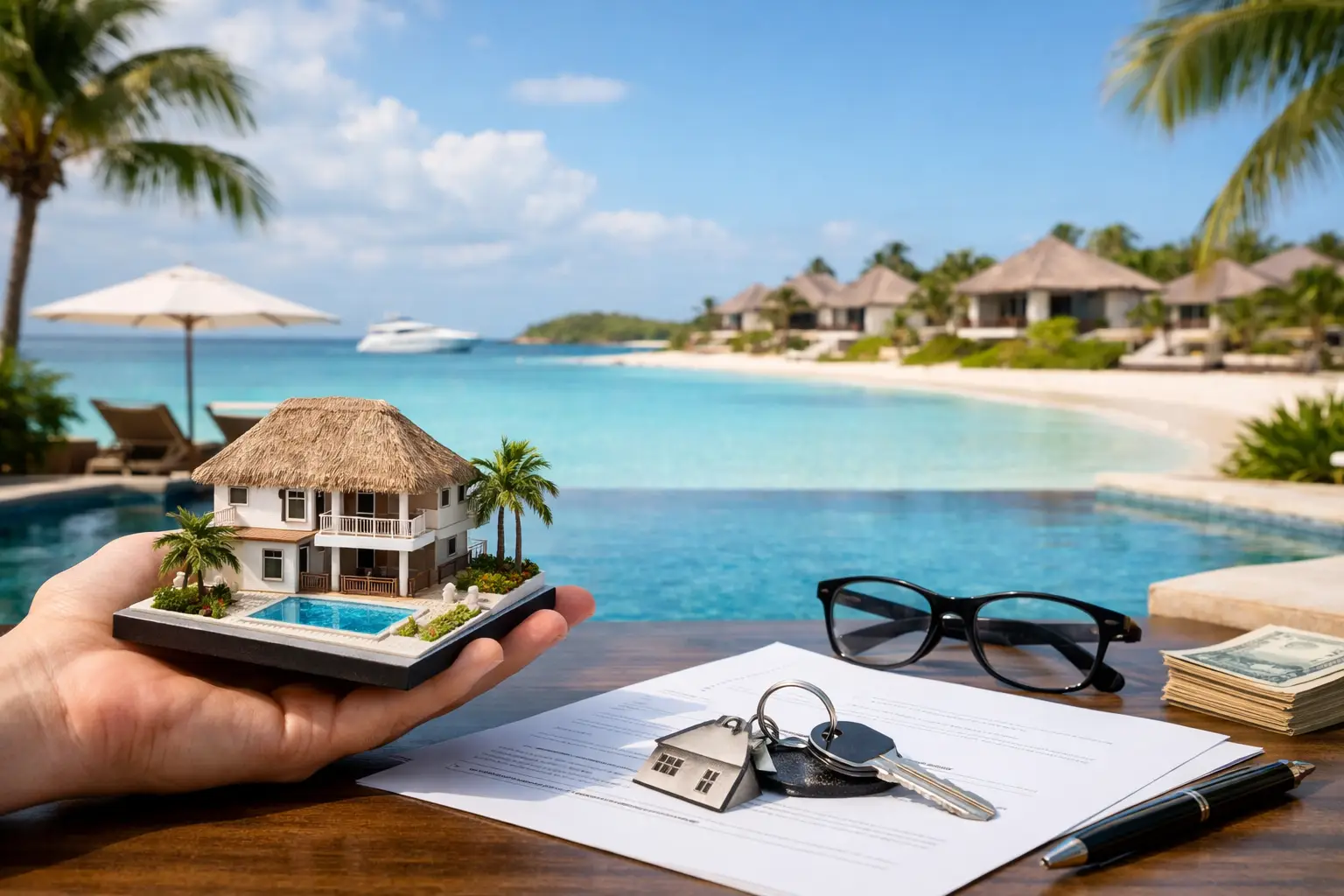
Is Buying Property in the Bahamas a Good Investment?
A waterfront home in the Bahamas can look like a pure lifestyle purchase at first glance. In reality, many buyers ask a more disciplined question before they move forward: is buying property in the Bahamas a good investment? The answer is often yes, but only when the property, location, holding strategy, and exit plan are aligned from the start.
For affluent buyers, the Bahamas sits in a rare position. It is close to the US, internationally recognizable, tax-efficient in several important ways, and supported by steady demand from second-home owners, seasonal residents, and vacation renters. That combination can create compelling long-term value. It can also lead to expensive mistakes if a purchase is driven only by scenery.
Is buying property in the Bahamas a good investment for your goals?
The better question is not whether Bahamian real estate is good in the abstract. It is whether it fits your objectives. A beachfront villa held primarily for family use has a very different investment profile than a marina condo intended for seasonal rental income, or a development parcel acquired for appreciation over a five to ten-year horizon.
If your priority is wealth preservation with meaningful lifestyle upside, the Bahamas can be especially attractive. Prime inventory is finite, waterfront land is limited, and top-tier homes in established destinations tend to hold global appeal. If your priority is maximizing yield alone, the picture becomes more selective. Not every island, product type, or price point performs equally well, and gross rental projections rarely tell the full story.
This is where a curated advisory process matters. The right acquisition is usually the one that balances personal use, market resilience, operating costs, and resale liquidity.
Why buyers continue to favor the Bahamas
The Bahamas benefits from a combination few destinations can match. Access is one of the strongest drivers. For US buyers, travel is straightforward, and that convenience has real market value. Owners are more likely to use properties they can reach easily, and renters are more likely to book destinations that do not feel logistically difficult.
There is also the question of brand strength. Nassau, Paradise Island, Lyford Cay, Albany, Harbour Island, and parts of Exuma have become internationally recognized luxury markets. Buyers are not simply purchasing a home. They are buying into a destination with established demand, hospitality infrastructure, and a proven reputation among high-net-worth travelers.
The tax environment is another draw. The Bahamas does not impose income tax, capital gains tax, or inheritance tax. That does not eliminate all ownership costs, and buyers still need qualified legal and tax counsel to understand cross-border implications. Still, for many purchasers, the jurisdiction compares favorably with alternatives.
Then there is the lifestyle factor, which should not be dismissed as secondary. In luxury real estate, lifestyle demand often supports long-term value. Properties near marinas, beach clubs, golf, private aviation access, and full-service resort amenities tend to attract both end users and investors because they offer something difficult to replicate elsewhere.
Where the strongest investment potential usually sits
Not all Bahamian property performs the same way. Prime markets tend to separate themselves quickly.
Nassau and Paradise Island remain central for buyers who want convenience, established services, and strong international visibility. This segment includes branded residences, marina-front condominiums, and luxury homes in gated communities. These assets can appeal to buyers who want lock-and-leave ownership, strong amenity packages, and easier resale to a broad pool of international purchasers.
Harbour Island tends to draw a more lifestyle-led buyer, but that does not make it any less investable. Limited supply, a strong luxury identity, and durable appeal among discerning travelers have supported pricing strength. The trade-off is that entry prices are high, and inventory can be tightly held.
Exuma attracts buyers looking for natural beauty, privacy, and a more secluded ownership experience. Certain properties there offer excellent long-term upside, particularly distinctive beachfront estates and well-positioned villas with rental appeal. But the market can be more nuanced, and asset selection matters more because infrastructure and liquidity vary by submarket.
For investment-minded buyers, the best opportunities are often properties with at least two of these qualities: irreplaceable waterfront positioning, branded or resort-backed infrastructure, strong rental compatibility, and proven buyer demand at resale.
Rental income can be attractive, but it is not automatic
Many buyers hope a Bahamian property will offset carrying costs through short-term rentals. That is possible, especially in high-demand destinations with strong seasonal traffic. Well-designed villas, resort residences, and turnkey homes near beaches, marinas, or major lifestyle anchors often perform best.
Still, rental income should be underwritten conservatively. Occupancy can be seasonal. Hurricane preparedness and insurance are real expenses. Property management standards vary, and luxury renters expect high service levels, excellent maintenance, and professional marketing. A home that looks exceptional in a brochure but is difficult to manage locally can underperform quickly.
It is also worth separating gross income from net return. Cleaning, staffing, utilities, maintenance, management fees, licensing, and vacancy periods all affect actual yield. Buyers who enter the market with a clear operating model tend to make better decisions than those relying on optimistic rental assumptions.
The risks buyers should weigh carefully
A sophisticated buyer should look at the Bahamas with both enthusiasm and discipline. The market offers genuine upside, but there are trade-offs.
Weather exposure is one of them. Coastal real estate carries climate and storm considerations, which affect insurance costs, building standards, and long-term maintenance planning. Newer construction, elevated design, quality engineering, and resilient infrastructure deserve close attention.
Liquidity is another factor. Luxury island real estate can be highly desirable, but it is not always fast-moving. The most distinctive, correctly priced assets in proven locations tend to attract buyers consistently. Overpriced or highly niche properties can sit longer, especially in softer market cycles.
Operating costs also matter more than some first-time island buyers expect. Imported materials, specialized labor, utility expenses, and premium insurance can meaningfully affect annual ownership costs. A property with lower acquisition cost is not always the better investment if it is inefficient to maintain or difficult to monetize.
Finally, legal and transactional complexity should not be treated casually. Title review, permitting history, ownership structure, and local compliance all require careful handling. This is not a market where self-serve searching is enough.
How to tell if a specific property is a smart investment
The best Bahamian investments usually look disciplined on paper before they look glamorous in person. Start with location quality and depth of demand. Ask who the next buyer will be, not just whether you love the view. A property that appeals to multiple buyer profiles is generally more resilient than one with highly specialized appeal.
Then evaluate the asset itself. Turnkey condition, dependable utilities, dockage where relevant, beach quality, privacy, and amenity access all influence both use and value. In the luxury segment, details matter. A home with excellent design but awkward access or weak service infrastructure may struggle against a less dramatic property in a better-positioned community.
Ownership structure and hold period should come next. If you expect to keep the property for years, appreciation and lifestyle use may justify a lower cash yield. If you want stronger annual returns, your acquisition should be optimized for occupancy, management efficiency, and guest appeal from day one.
This is where buyers benefit from working with an advisory-led firm rather than relying on listing volume alone. Island Property Group is built around that principle – this is not a search experience, but a guided acquisition process shaped by local knowledge, discretion, and market access.
So, is buying property in the Bahamas a good investment?
For the right buyer, yes. The Bahamas can offer a rare mix of personal enjoyment, long-term asset value, international desirability, and selective income potential. But it is not a market where every beautiful property is automatically a strong investment.
The strongest purchases tend to be in proven locations, backed by real demand, and matched to a clear strategy. Buyers who do well here usually know whether they are prioritizing appreciation, rental performance, family use, tax efficiency, or legacy ownership. Once that is clear, the field narrows and the right opportunities become easier to identify.
The Bahamas rewards buyers who think beyond the postcard. If you approach the market with clarity, patience, and experienced guidance, a property here can become more than a home in an exceptional setting. It can be a well-placed part of a broader wealth and lifestyle strategy.
Posted by Mark Wood
on June 26
Frequently Asked Questions
What types of properties in The Bahamas tend to make the best investments?
Properties in established luxury markets with beachfront or waterfront locations, strong buyer demand, quality amenities, and proven resale appeal generally offer the strongest long-term investment potential. Resort residences, marina-front condominiums, and well-located luxury villas are among the most sought-after asset types.
Can you earn rental income from a property in The Bahamas?
Yes. Many owners generate income through vacation rentals, particularly in popular destinations such as Nassau, Paradise Island, Harbour Island, and Exuma. However, rental performance depends on location, property quality, management, seasonality, and compliance with local regulations.
What are the biggest risks of investing in Bahamian real estate?
As with any luxury real estate investment, buyers should consider insurance costs, hurricane exposure, ongoing maintenance, market liquidity, operating expenses, and local legal requirements. Thorough due diligence and experienced local advisors can help reduce these risks.
How do I know if a property in The Bahamas is a good investment?
A strong investment is typically located in a desirable market with consistent buyer demand, quality infrastructure, attractive amenities, and long-term appreciation potential. Buyers should evaluate the property’s intended use, expected holding period, ownership costs, rental potential, and resale outlook before making a purchase.