
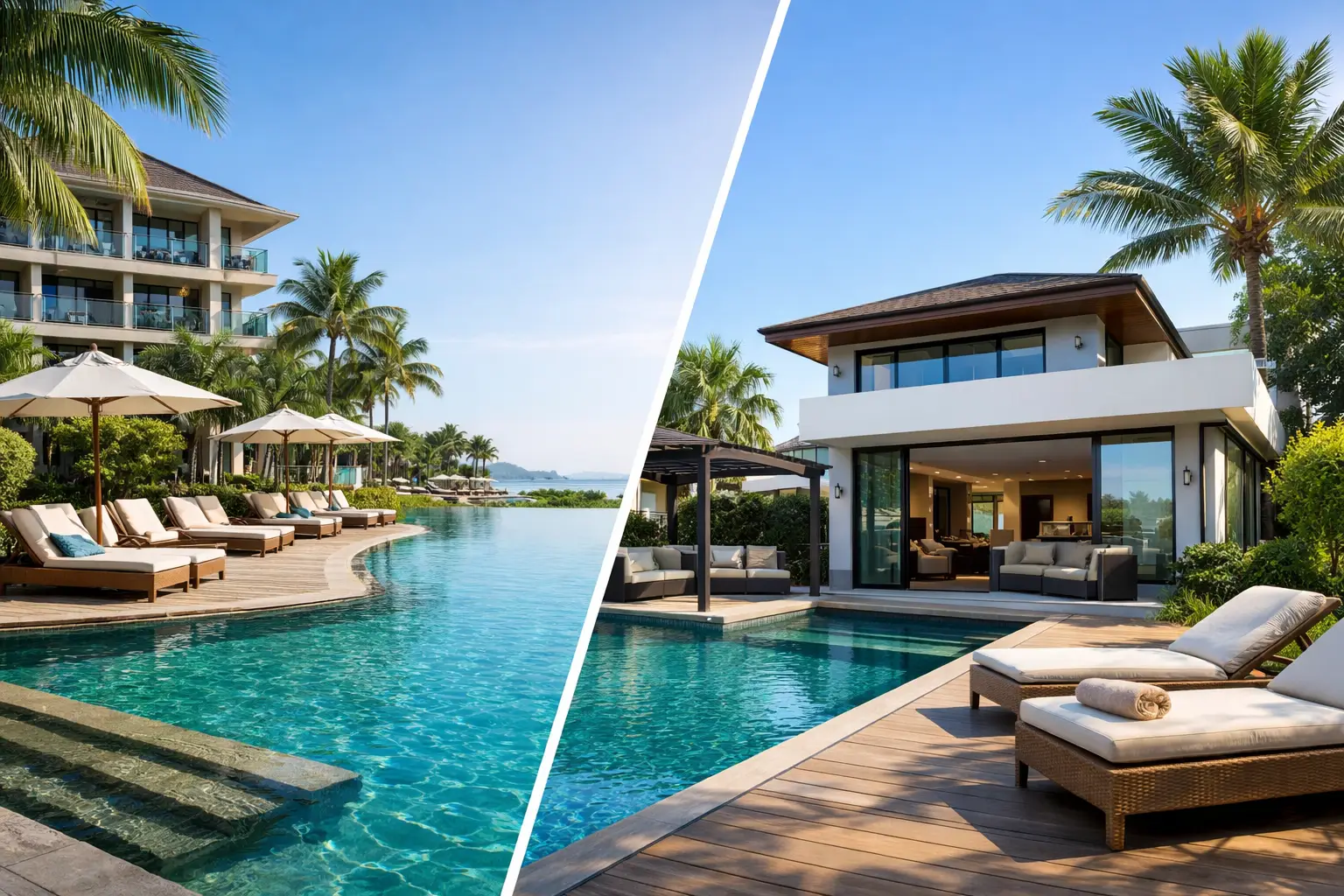
Resort Residence Versus Villa: Which Fits You?
A sunrise swim before breakfast, a private chef arranged for dinner, and a home that can welcome family for weeks at a time: both ownership paths can deliver the Caribbean lifestyle. Yet the choice of resort residence versus villa changes far more than the view from your terrace. It shapes how you arrive, who manages the details, how your property may be used when you are away, and the degree of freedom you retain over every decision.
For discerning buyers, this is rarely a simple question of square footage or bedroom count. It is a question of how you want to live, host, travel, and hold real estate across borders.
Resort Residence Versus Villa: The Real Difference
A resort residence is a privately owned home within, adjacent to, or affiliated with a luxury resort. It may be a condominium, branded residence, townhouse, or standalone home in a managed resort community. Owners typically have access to a defined level of hospitality, amenities, security, and property services.
A villa is usually an independent luxury home, whether it sits on a beachfront parcel, within a gated community, on a hillside, or on a private island. The owner generally has greater discretion over the property, from design and staffing to guest experience and rental strategy. The operating responsibilities are also more direct.
Neither is inherently superior. A resort residence is often selected for ease, consistency, and a polished arrival experience. A villa is often selected for privacy, individuality, and control. The better fit depends on what matters after the purchase, when the home becomes part of your life.
The Resort Residence Experience
The appeal of a resort residence begins with the transition from travel to arrival. A staffed resort can coordinate airport transfers, greet guests, prepare the residence, stock the kitchen, book dining, organize excursions, and maintain the home year-round. For owners who divide their time among several residences or have demanding professional schedules, that level of support is meaningful.
Amenities can be equally compelling. Depending on the development, ownership may include access to a beach club, spa, fitness center, marina, restaurants, tennis, children’s programming, and concierge services. Branded residences can add the familiarity of an established hospitality standard, which may appeal to buyers who value predictable service across destinations.
Convenience has a framework
The service model is not the same at every property. Some resort residences provide hotel-style attention; others operate more like an upscale residential community with shared amenities. Service charges, association fees, reserve contributions, rental program terms, guest policies, and renovation standards can vary considerably.
That framework is part of the value proposition, but it also means the owner is not making every decision independently. There may be rules around exterior changes, furnishings, rental participation, use of approved vendors, and the number or profile of guests. For a buyer who wants a beautifully maintained residence without managing each operational detail, these parameters can feel reassuring. For another, they may feel restrictive.
Rental participation can be attractive, but should be examined closely
Many resort residences offer an optional or required rental program. A professionally managed program may provide distribution, reservations support, housekeeping standards, and guest services that would take significant effort to replicate independently.
However, an owner should look beyond headline demand. The key questions are practical: How many owner-use dates are available during peak periods? What share of rental revenue is retained for management, marketing, housekeeping, and other services? Is participation mandatory? How is the residence positioned against other inventory in the same resort? Are personal furnishings or upgrades required to meet program standards?
Rental income can support an ownership strategy, but it should not be the only reason to choose a home. Seasonality, operating costs, resort positioning, and owner-use preferences all deserve careful consideration.
The Villa Experience
A villa offers a more personal expression of Caribbean ownership. You choose the architecture, interiors, staffing style, dining rhythm, landscape, and level of privacy. Whether you envision a quiet retreat in Anguilla, a waterfront estate in the Bahamas, or a hillside home in St. Barts, a villa can be shaped around the way your family actually spends time together.
For frequent hosts, this flexibility is often decisive. A villa can be designed for multigenerational gatherings, entertaining, wellness, watersports, or long stays. There is no lobby between your front door and the sea, no shared pool schedule, and no resort guest activity just beyond the garden wall.
Privacy and control come with responsibility
Independent ownership requires a capable local team. Even an impeccably designed villa needs proactive maintenance in a tropical climate, especially when it is unoccupied. Housekeeping, pool and landscape care, hurricane preparation, utilities, insurance coordination, security, guest arrivals, and repairs all require oversight.
The right property manager can turn this responsibility into a well-run ownership experience. Still, the owner has more decisions to make: who is hired, which vendors are approved, how inventory is handled, when maintenance occurs, and how the property is presented to guests or renters.
This greater control can be particularly valuable for buyers who have a clear design vision or who want to create a distinctive rental offering. It can also suit families who prefer an established household team and a home that feels entirely their own from the moment they arrive.
Villas may offer greater creative latitude
Subject to local requirements and community rules, villa owners can often make more meaningful changes over time. That may include expanding outdoor living areas, refining the pool terrace, upgrading kitchens, adding guest cottages, or reworking interiors to suit a changing family. In a resort residence, improvements may be limited by brand standards, condominium rules, or shared-building considerations.
That latitude is valuable, but buyers should assess the property’s physical realities before becoming attached to a vision. Access, topography, utilities, waterfront conditions, staffing availability, and construction logistics vary significantly from island to island.
How to Choose Based on Your Actual Use
The most useful question is not, “Which property is more luxurious?” Exceptional examples exist in both categories. Ask instead, “What does an ideal month here look like?”
If your ideal arrival involves stepping into a fully prepared residence, dining reservations already arranged, and a team that handles every detail while you focus on family and leisure, a resort residence may be the natural choice. It is especially well suited to buyers who want a lock-and-leave property, enjoy resort amenities, or prefer institutional-quality management.
If your ideal month involves a private household, total control over your surroundings, and the freedom to create your own hospitality experience, a villa may be more compelling. It is often the stronger fit for buyers who value seclusion, host extended family regularly, or want a property that can evolve over many years.
There is also a middle ground. Some resort communities offer detached villas with resort services, combining privacy with access to amenities and professional management. These properties can be highly attractive, though the details still matter. A detached home inside a resort is not automatically equivalent to an independent villa, particularly when it comes to operating rules and rental requirements.
The Due Diligence That Protects the Experience
Before selecting either path, buyers should evaluate the full ownership model, not only the residence itself. This includes how title is held, recurring costs, association obligations, management agreements, insurance considerations, rental restrictions, staffing needs, maintenance history, and the quality of local infrastructure.
For resort residences, request the governing documents and understand the service level attached to ownership. For villas, assess the strength of the existing operations and the availability of reliable local management. In either case, the best asset can become less enjoyable if the ownership structure does not support your intended lifestyle.
Cross-border purchases also benefit from coordinated local guidance. Each destination has its own market practices, ownership pathways, and transaction process. Island Property Group helps buyers compare opportunities across the Caribbean through one experienced relationship, connecting the lifestyle decision with the practical work required to acquire and care for the right property.
A Home Should Match the Life Around It
A resort residence offers the confidence of an established hospitality environment. A villa offers the rare pleasure of a home that answers only to you. The right choice is the one that makes ownership feel effortless in the ways you value most, whether that means a familiar concierge at arrival or the complete quiet of your own private shoreline.
Choose the property that supports the life you intend to spend there, not simply the image that first captures your attention.